
Parkitecture: Summer Edition
A Perfect Evening at Huntington
By Greg Soltis
Sometimes a delay works out for the better.
After smoke from the Canadian wildfires forced Parkitecture: Summer Edition to be rescheduled, the program finally arrived at Huntington Reservation on August 20. Instead of the heat and humidity we might have expected in mid to late August, attendees were greeted by an unusually cool evening, a steady breeze off Lake Erie, and waves rolling toward Huntington Beach below the bluffs.
The weather, and the setting, could hardly have been better.
AIA Cleveland Executive Director Ann Davis arrived early at the Huntington Lake Shelter, perched high on the bluff at the northeast end of the reservation. Within a short walk of the pavilion were several recent Cleveland Metroparks projects that would become the first chapter of the evening: the historic Huntington Water Tower, The Noshery, Karen's Way Play Space, and newly constructed restroom and accessibility improvements.
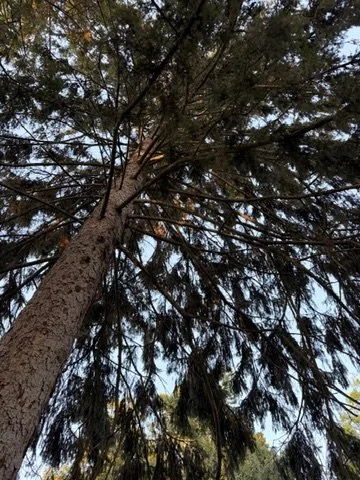
Parkitecture, or National Park Service Rustic style, is a building design approach from the late 19th and mid-20th centuries. This design typically uses local stone, raw logs, and hand-built craft so structures like lodges, bridges, and gateways blend smoothly into natural wilderness landscapes.
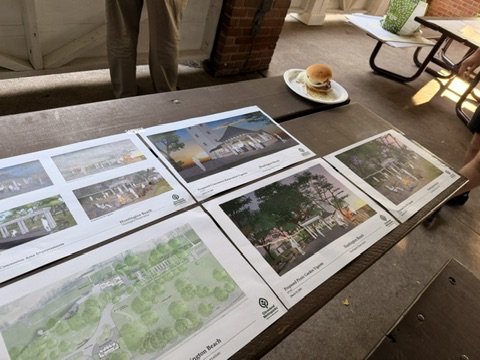
Parkitecture has always been about experiencing architecture, planning and landscape architecture in the places where those disciplines come together. At Huntington, attendees did not simply hear about the projects. They stood beside them, looked through drawings and renderings, and spoke directly with some of the people who helped design them.
Cleveland Metroparks Landscape Architect Amanda Meier, Landscape Architect Chris Cheraso, now with SmithGroup, and Cleveland Metroparks Architect Ryan Denker shared drawings, renderings and insight into the planning and design process behind the improvements. Project materials taped down to tables, transformed the pavilion into an informal outdoor design studio while attendees wandered between the boards, the buildings and the landscape itself.
There was no conference room and no PowerPoint presentation. Lake Erie was the backdrop.
This was, after all, the Summer Edition.
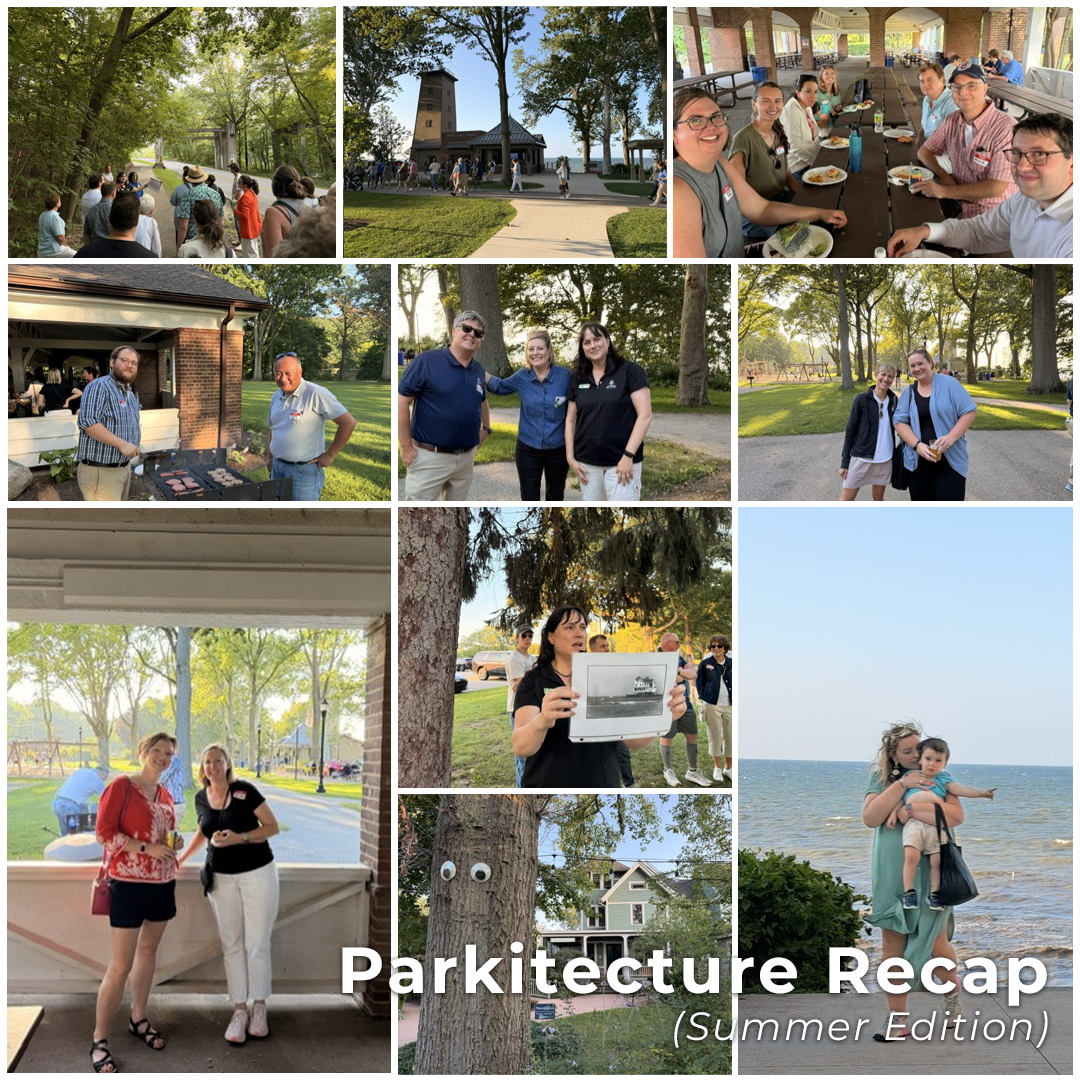
While conversations about architecture and landscape design continued, Chad Boston of RDL Architects and Jae Cho of CBLH Design took over the grills. Hamburgers and hot dogs began coming off the grill as people grabbed drinks from The Noshery, caught up with colleagues, met new people and looked out over the lake.
For a while, the evening was simply a summer cookout in the park.
Then Karen Lakus gathered the group, and the landscape began to reveal a much deeper story.
Before It Was a Park
Before Huntington was a Cleveland Metroparks reservation, it was the country estate and hobby farm of industrialist, inventor and philanthropist John Huntington.
Born in England in 1832, Huntington immigrated to Cleveland and became involved in the city's rapidly developing oil-refining industry. His mechanical inventions and business interests eventually connected him with Clark, Payne & Co., which became part of John D. Rockefeller's Standard Oil Company in 1870. The wealth Huntington accumulated ultimately supported philanthropic trusts associated with charitable organizations, technical education and the establishment of the Cleveland Museum of Art.
But along the Lake Erie shoreline, Huntington also created something very different: a private country retreat.
The roughly 100-acre estate included orchards, vineyards, livestock, a summer residence and an ingenious private water system. Its surviving water tower, which resembles a small lighthouse overlooking the lake, once stored water pumped uphill from Lake Erie to irrigate Huntington's gardens, orchards and vineyards.
It was there that Karen began our hike.
The Cleveland Metroparks acquired the Huntington property in the 1920s, beginning the transformation of a private industrialist's estate into a public landscape. Nearly a century later, much of the fascination of Huntington Reservation comes from the fact that the transformation was never complete in the sense of wiping the slate clean.
The old landscape is still there.
You just have to know how to read it.
Reading the Landscape
Karen led the group away from the water tower, through the pedestrian tunnel beneath Lake Road and into the wooded southern portion of the reservation.
Almost immediately, the experience changed. The broad view of Lake Erie disappeared behind the trees. The sounds of the beach and pavilion faded. Porter Creek, wooded slopes and fragments of stone began telling another version of Huntington's history.
Along the way, Karen pointed out old cobblestone and stone walls still standing quietly among the trees. What might look to a casual hiker like an unexplained pile of stone suddenly became evidence of the former estate. Elsewhere, features constructed during the WPA era demonstrated another period when public investment reshaped the landscape.
Then the hike reached an enormous concrete remnant spanning the Porter Creek valley.
Today it can look strangely monumental in the woods, a piece of infrastructure seemingly disconnected from anything around it. It is a surviving trestle from the Lake Shore Electric Railway, part of an interurban transportation network that once linked Cleveland with communities along the Lake Erie shoreline and ultimately west toward Toledo and beyond.
Before the automobile became the dominant way to move through the region, electric interurban cars carried millions of passengers between cities, towns, farms and lakefront destinations. The last Lake Shore Electric cars ran in 1938.
Once again, the park was revealing another landscape hidden inside the one we see today.
Estate. Transportation corridor. Public works project. Metropolitan park.
Each period left something behind.
Historic Buildings Find New Lives
Eventually, the group emerged near the BAYarts campus, where the story of preservation took another unexpected turn.
Unlike the water tower or railway trestle, not every historic building there began its life at Huntington.
Several were moved to the site from elsewhere in Bay Village, creating a small collection of buildings that have found new purposes within the park.
Perhaps the most remarkable is the Irene Lawrence Fuller House. The Queen Anne-era house once stood on another Lake Erie bluff and later became the home of Dr. Richard Sheppard and his wife. Their son, Dr. Sam Sheppard, became the central figure in one of Cleveland's most infamous murder cases and was arrested on the front porch of the house in 1954.
When redevelopment threatened the structure decades later, the community saved it in spectacular fashion. In 1984, the roughly 120-ton house was placed on a barge and floated approximately three and a half miles along the Lake Erie shoreline to Huntington Reservation.
Karen brought historic photographs showing the extraordinary move, a reminder that historic preservation occasionally requires considerably more than carefully restoring a building where it stands.
Nearby, another relocated building has taken on a decidedly contemporary second life.
The old railroad Station House is now home to Chatty's Pizzeria, and on the evening of Parkitecture the surrounding patios and outdoor spaces were buzzing with people eating, talking and enjoying the summer evening. Nestled among historic buildings, mature trees and the landscape of Huntington Reservation, the scene demonstrated perhaps the most important lesson of the entire night.
Preservation does not have to mean freezing a place in time.
Old buildings and landscapes can remain alive by finding new purposes.
And if you are looking for an alfresco dinner surrounded by historic architecture inside one of Northeast Ohio's most beautiful parks, Chatty's should probably be added to your list.
Seeing a Familiar Place Differently
By the time the group returned, Huntington Reservation no longer felt like simply a beach, a park or even a collection of architectural projects.
It had become a timeline.
The evening began with contemporary Cleveland Metroparks projects designed to make the reservation more welcoming and accessible. It moved backward through the remnants of John Huntington's Gilded Age estate, through early twentieth-century transportation infrastructure and WPA-era park improvements, and then forward again through preservation projects that brought historic buildings into new uses.
That is exactly what Parkitecture is intended to do.
It gives us an opportunity to get outside, explore our region and discover how architecture, landscape architecture, planning, history and nature intersect in places we may think we already know.
A tremendous thank you goes to Karen Lakus for creating such a thoughtful and engaging exploration of Huntington's history; to Amanda Meier, Chris Cheraso and Ryan Denker for sharing the design thinking behind Cleveland Metroparks' recent work; to Chad Boston and Jae Cho for keeping everyone well fed; to Ann Davis and everyone from AIA Cleveland, Ohio Chapter ASLA and Cleveland Metroparks who helped make the evening possible; and especially to everyone who decided to spend a beautiful summer evening getting out and exploring.
For some, Huntington was an entirely new place.
For others, it was a familiar place seen in an entirely new way.
Parkitecture: Fall Edition is coming soon.
Gregory Soltisis a Senior Designer at RDL Architectsand Co-Director of Programming at AIA Cleveland. Follow Soltis LinkedIn for architecture + design events, history and news.