
Parkitecture: Autumn Edition Recap
A Spectacular Autumn Finale
By Greg Soltis, Assoc. AIA
Four seasons, four park landscapes, and a year of discovery came to a beautiful close on Sunday, October 25, with Parkitecture’s Autumn Edition at North Chagrin Reservation.
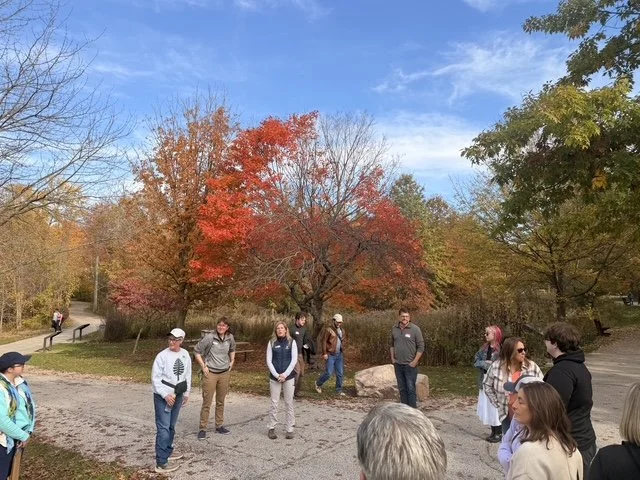
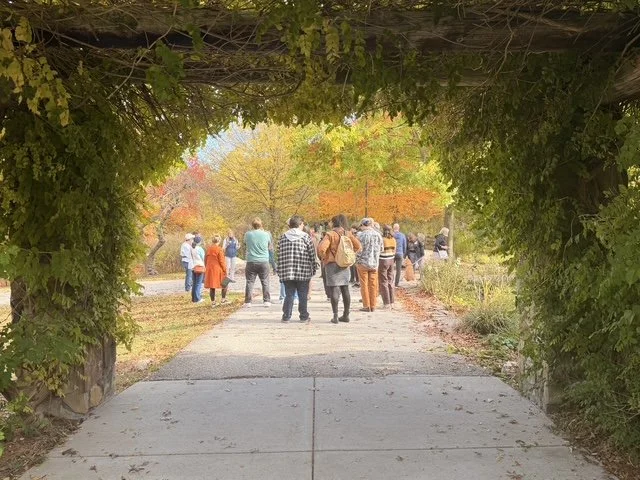
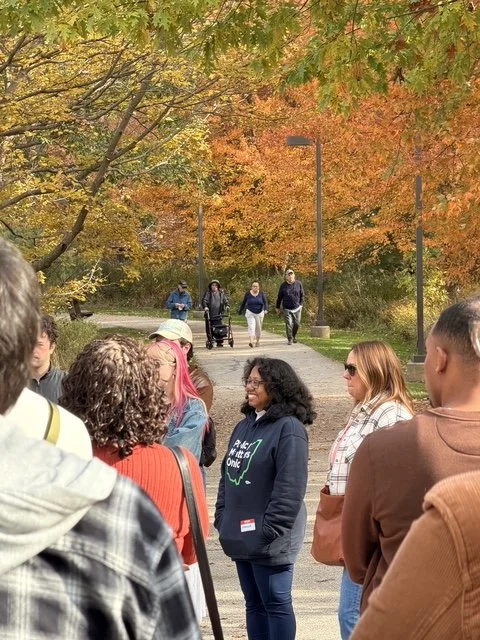
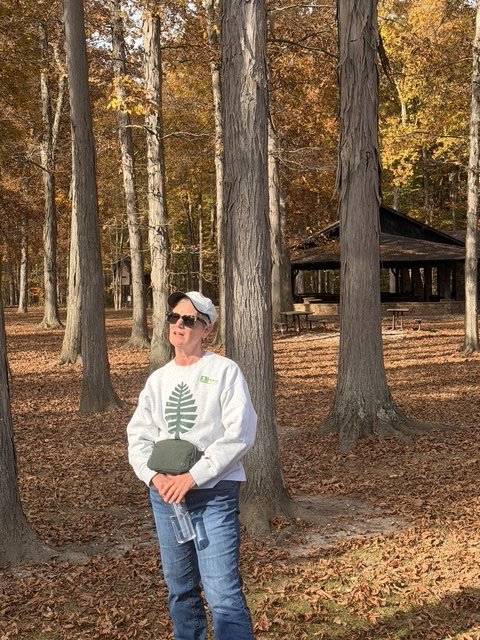
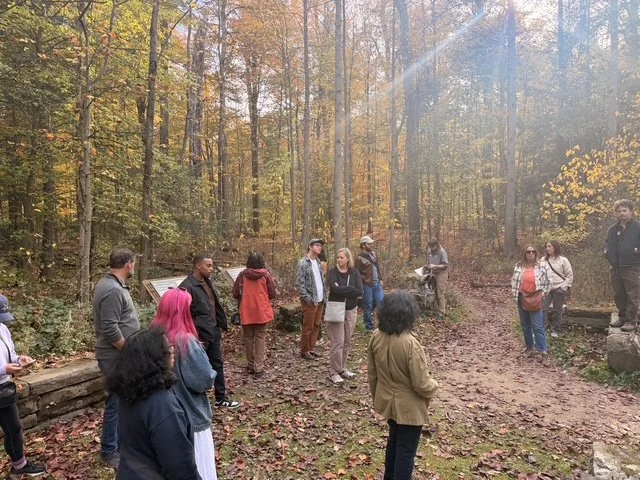
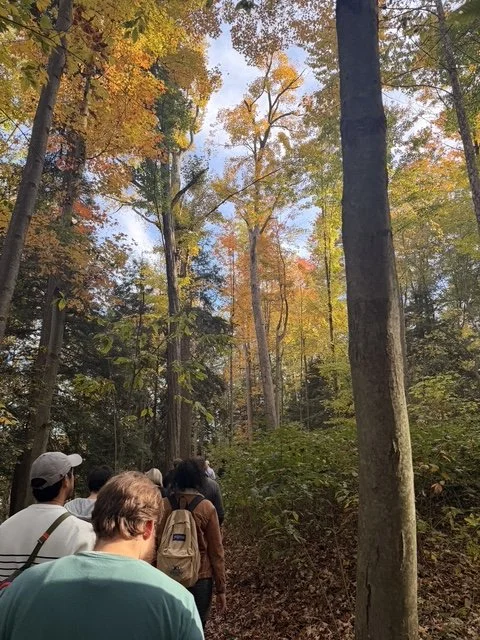
When we began planning the program, we wondered whether late October might find us past the peak of the season’s color. Instead, we were treated to what felt like the perfect autumn afternoon. Leaves crunched beneath our feet while the canopy overhead remained full of vibrant color, surrounding us with warm oranges, yellows, and reds. It was a fitting setting for the final gathering of a series that has explored the connections among architecture, landscape architecture, planning, and environmental stewardship throughout 2026.
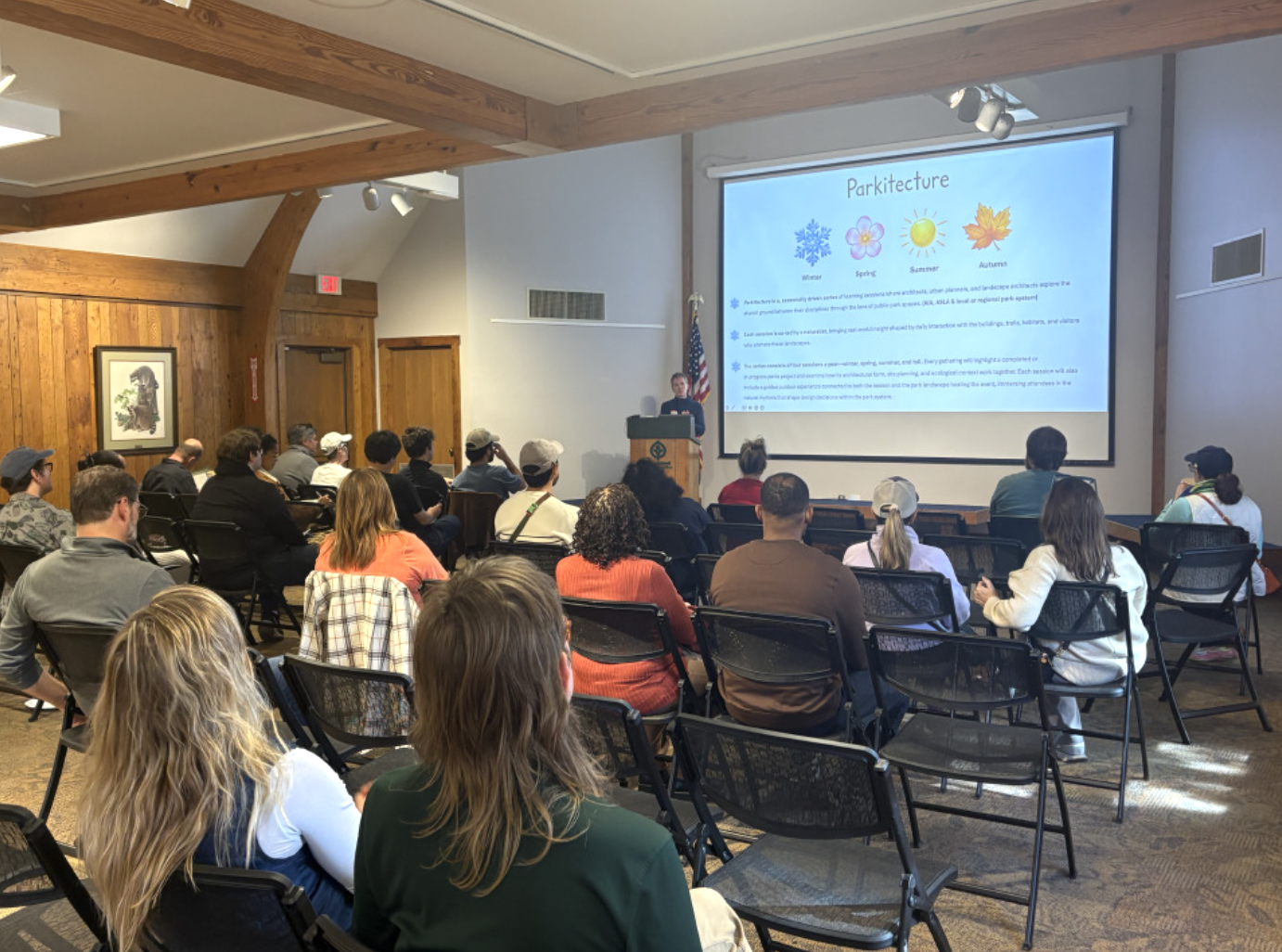
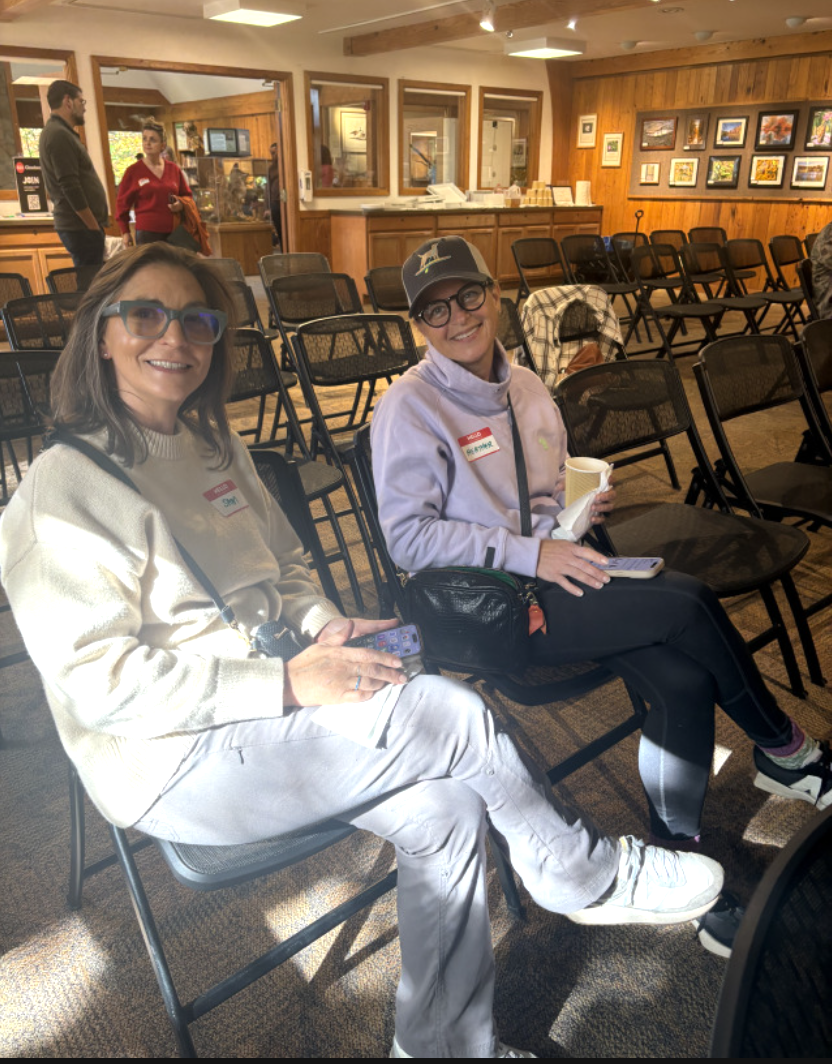
The afternoon began at North Chagrin Nature Center with conversation, exploration, and apple fritters and cider from Patterson Fruit Farm. Participants mingled inside and around the building before gathering for a presentation on the transect, a section through a landscape that helps us understand the relationships among its different environments.
The presentation traced connections from Alexander von Humboldt and Patrick Geddes through Ian McHarg to the New Urbanist work of Andrés Duany and Elizabeth Plater-Zyberk. Humboldt described nature as an interconnected whole. Geddes connected human settlement with regional geography. McHarg established methods for planning informed by ecological processes. New Urbanists adapted the transect concept to the organization of cities, towns, and neighborhoods.
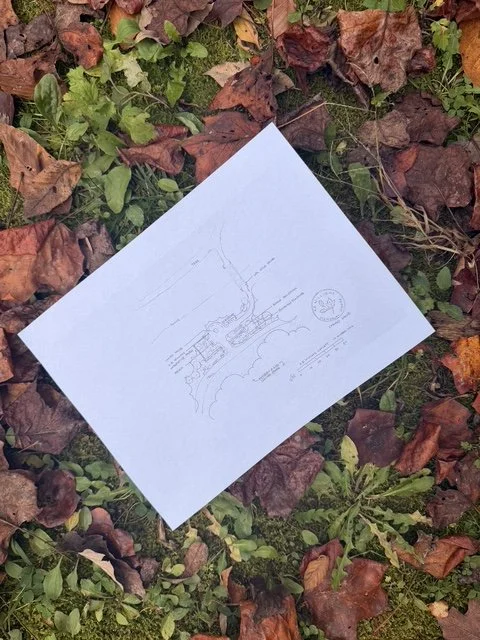
Together, these ideas offer an evolving understanding of place and reinforce a central principle of Parkitecture: architecture, landscape architecture, planning, and ecology are deeply connected. A transect drawn through North Chagrin Reservation, from S.O.M. Center Road to the Chagrin River, illustrated those relationships across suburban neighborhoods, designed recreational spaces, old-growth woodland, wetlands, and the river valley. It provided a framework for understanding the landscape we were about to explore.
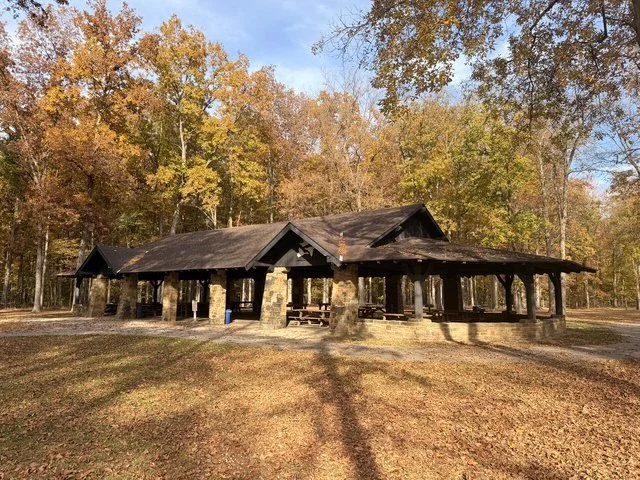
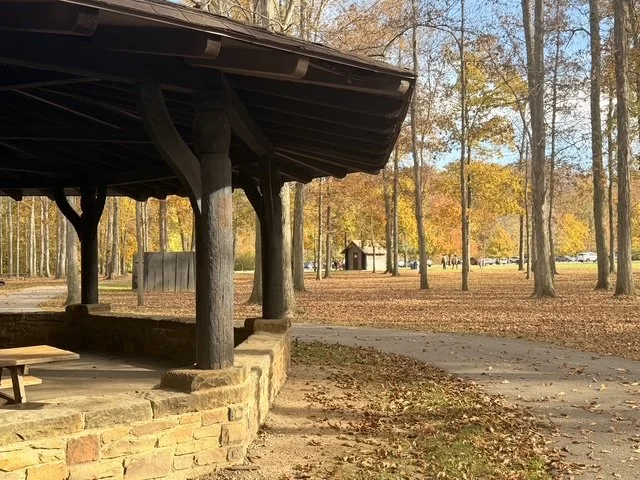
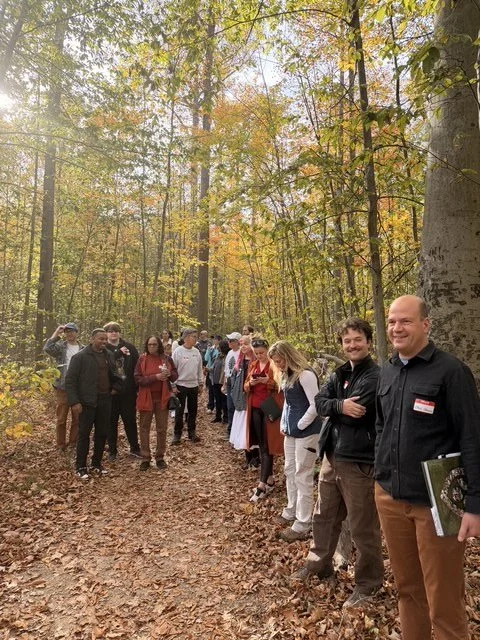
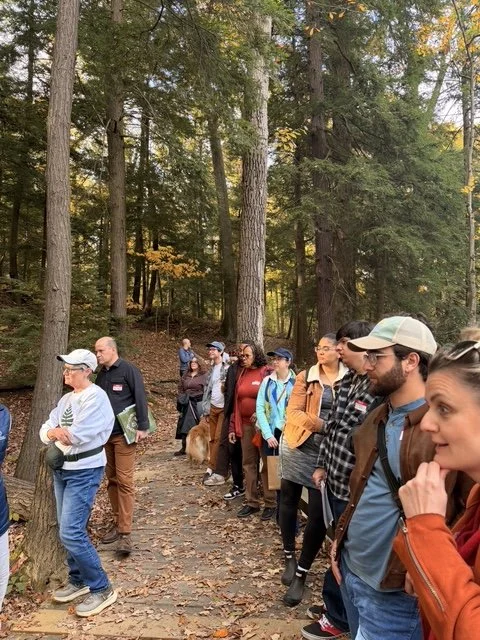
Cleveland Metroparks architect Ryan Denker spoke about the Nature Center, grounding the discussion in the building where our afternoon began. Naturalists Kelsey Rogers and Amber Walden then led us on a two-mile hike, sharing the natural and cultural history of the landscapes along the way. Our route took us past the Nature Center’s pond and wetlands, through woodland and an open field, past the WPA-era Forest Picnic Shelter, and into A.B. Williams Memorial Woods, a National Natural Landmark named for Cleveland Metroparks’ first naturalist.
Crossing from the field into the old-growth forest brought an unmistakable change in atmosphere. The enclosure of the trees, the quality of the light, and the hum of insects made the threshold immediately perceptible. It was a moment that prompted us to consider how much of a park experience is shaped by thoughtful design.
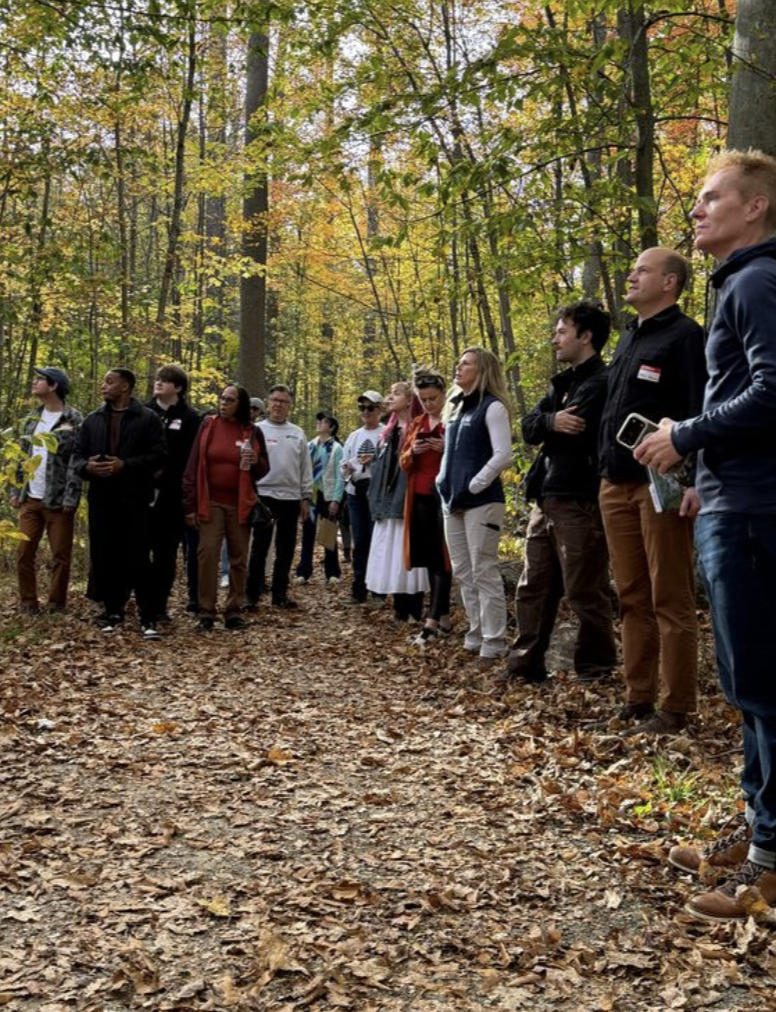
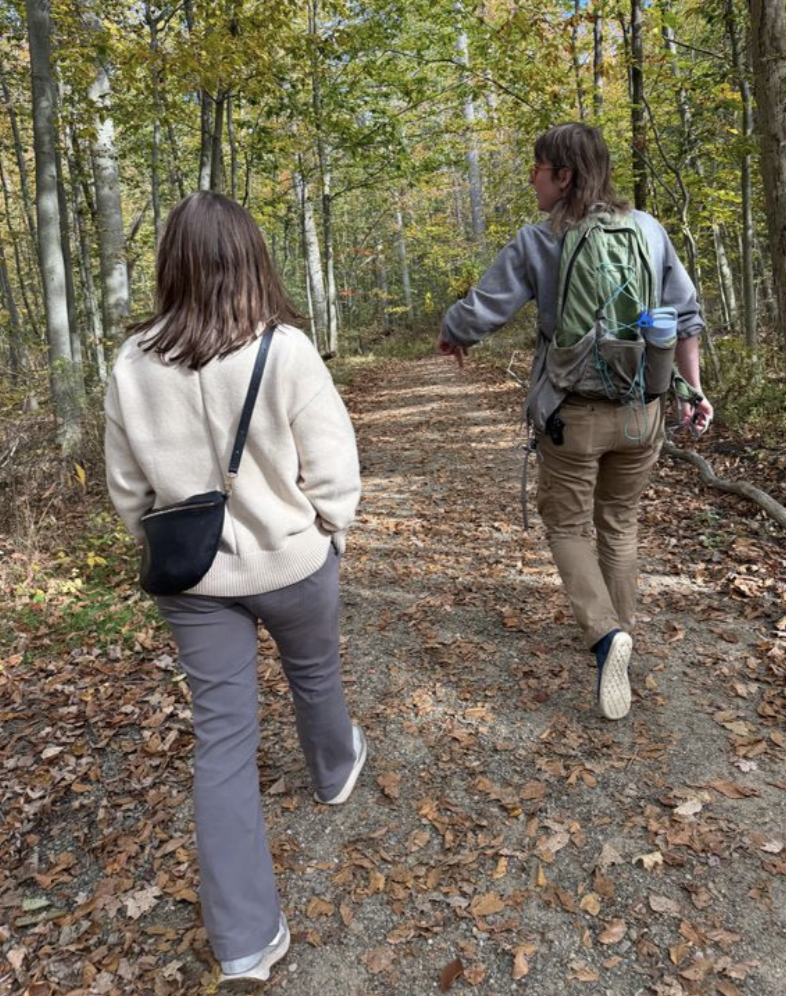
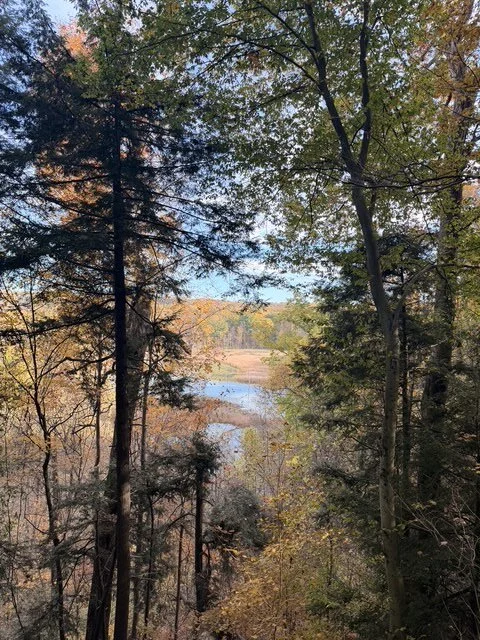
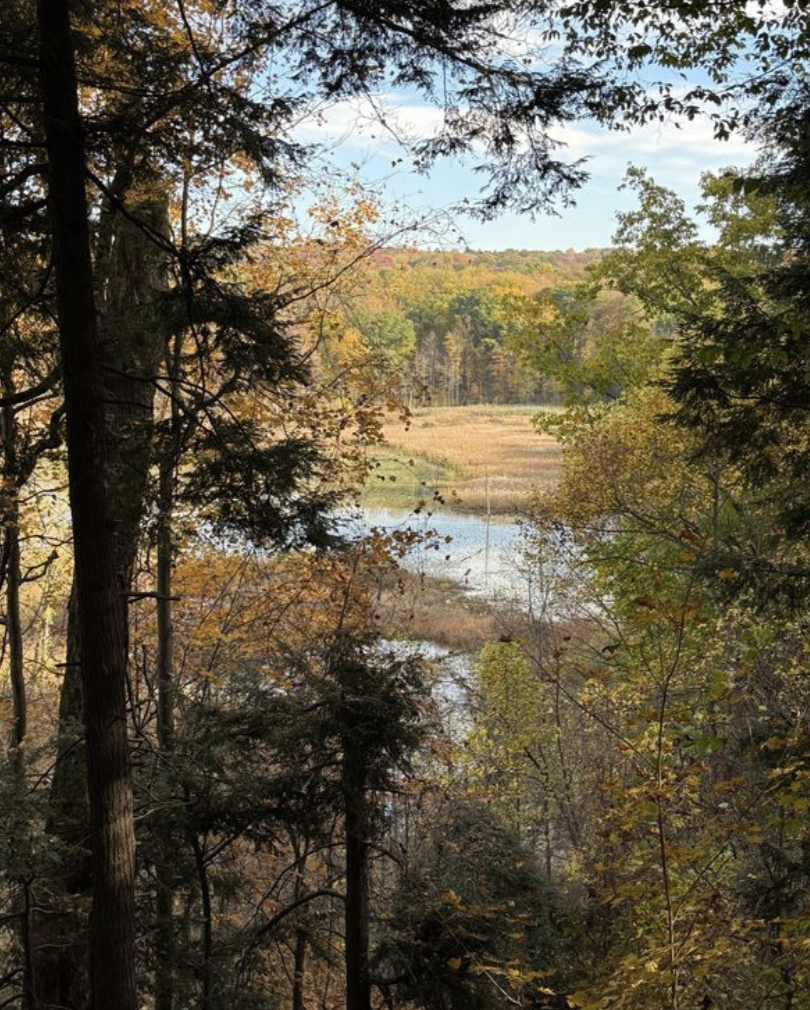
Metroparks planner and landscape architect Kelly Coffman explained how the design team lays out trails to offer a sequence of experiences. We could see that intention as our path approached the valley rim, curved back into the forest, and returned to the edge. At one particularly beautiful overlook, a wooden boardwalk extended along the steep slope, framing a stunning view of Dinger’s Marsh below. The placement of the path invited us to pause and look more closely.
We also visited the site of the original Trailside Museum, an early predecessor of today’s nature centers, which was destroyed by a lightning-caused fire in 1987. Metroparks landscape architect Chris Cheraso shared his experience designing the site’s later interpretation. Stonework traces the former building’s footprint and provides a place to sit within the forest, while an interpretive display tells the story of the museum and its role in the park’s history.
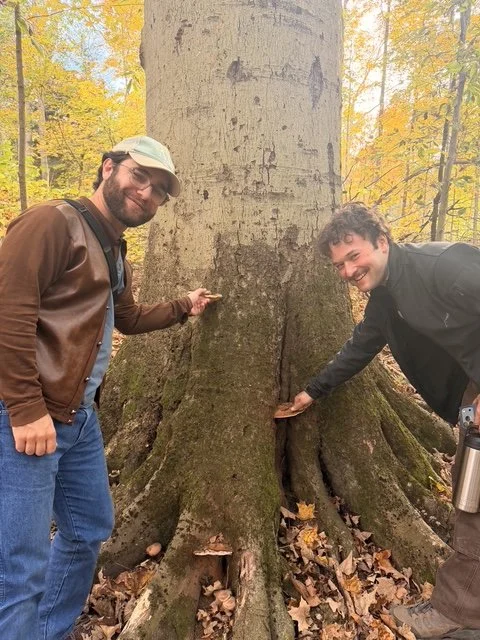
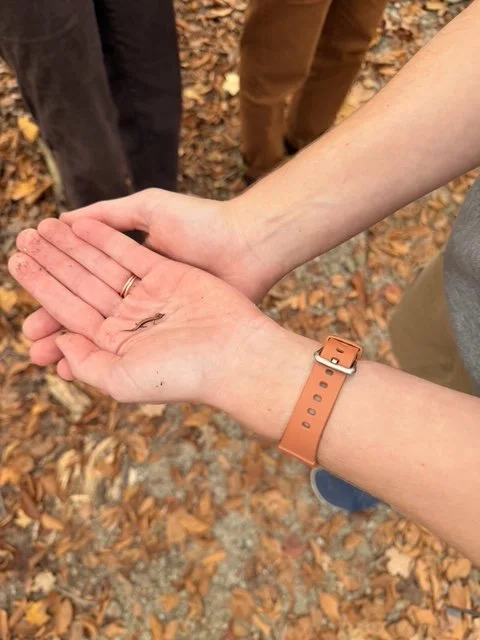
As we wound through the woods, we encountered trees hundreds of years old, a rich variety of plant life, and seasonal fungi emerging from trunks and fallen wood. The hum of insects ebbed and flowed along the trail. These details, brought into focus by our guides, encouraged us to slow down and appreciate the forest at different scales, from the smallest growth on a tree to the broad landscape of the river valley.
It was a beautiful afternoon and a fitting conclusion to this year’s Parkitecture series. From winter at Brecksville Reservation to spring at Garfield, summer at Huntington, and autumn at North Chagrin, each gathering offered a different perspective on the parks we treasure and the people who care for them.
We are deeply grateful to the Cleveland Metroparks staff for opening their world to us and helping us see the cultural and ecological landscapes of our park system with greater understanding. Thank you, too, to everyone who joined us for one or more editions of Parkitecture in 2026. Your curiosity, conversation, and enthusiasm made the series a pleasure to share.
Stay tuned for an announcement about Parkitecture 2027, when we will begin a new collaboration with another park system in our metropolitan area. We look forward to exploring together again!
Gregory Soltis is Senior Designer at RDL Architects and Co-Director of Programming at AIA Cleveland.
Follow Soltis on LinkedIn for architecture + design events, history and news.
Photos by Greg Soltis and Heather Mekesa.