Event Recap: Sketch-n-Sip: Aliberti Art Tile Studio | Pattern, Process, and Place
May 28, 2026
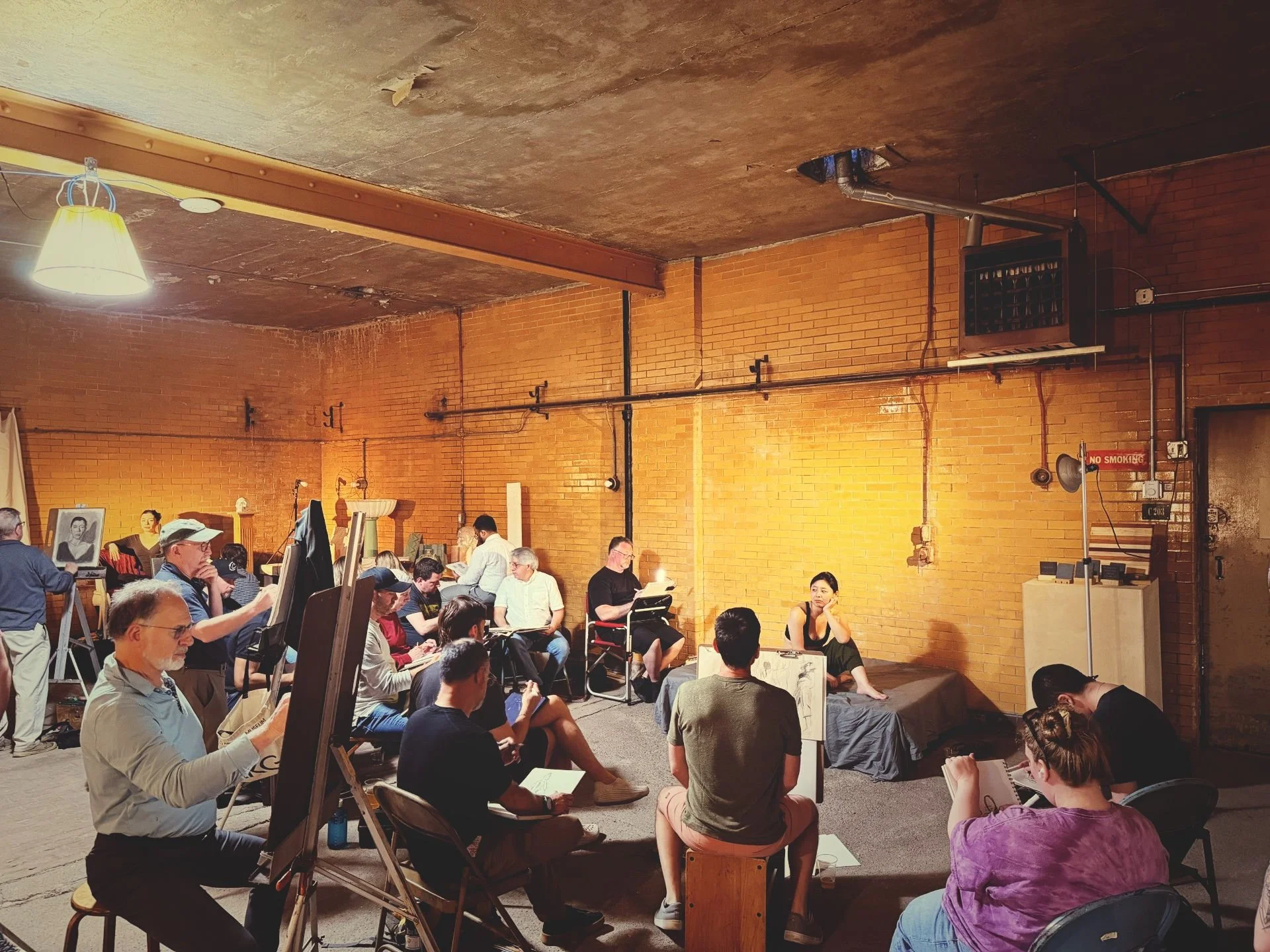
Artist Gregory Aliberti reminded us why place, process, and people matter at the most recent session of AIA Cleveland’s Sketch-n-Sip. The evening began before anyone picked up a pencil or touched a tile. It began with the walk into the historic Hildebrandt Building, through the gateway and into the parking court at the center of the complex, then up the stairs beneath the canopy marked “ART STUDIO.” At the top of the stairs, three left turns led us past a floral design studio, through a space set up for figure drawing in coordination with the evening’s program, and finally into the working studio of ceramic artist Gregory Aliberti.
The building was alive that night. Studios were open, people were moving through the halls, and The Hildebrandt had the hum of a place still doing exactly what old industrial buildings do best: adapting, sheltering work, and giving creative people room to make things.
As guests arrived, they gathered around food and drinks, enjoying sausage, Italian combo, and turkey sandwiches from Tripi Italian Deli on Lorain Avenue, one of Greg’s go-to spots when he is working in the studio. There was also Cava, Spanish sparkling wine from Little Italy Wines, which helped set the tone for an evening that was relaxed, generous, and full of discovery.
Greg’s presentation was part lecture, part studio visit, and part storytelling session. He walked us through years of work with humor, honesty, and a deep understanding of what it means to make art that becomes part of the city. He had the room laughing as he described his projects, his clients, and the unusual things that, as we all know, can happen during the design process.
Many of the projects he shared were familiar. His work is peppered throughout Cleveland, woven into the places we pass every day, sometimes without realizing whose hands helped shape them. There were even people in the room who had worked with him directly, including Kamla Lewis, who collaborated with Greg during her time at the County Land Bank on the Mickey’s Building in East Cleveland.
One of the most meaningful parts of the evening was hearing Greg speak about Strive for Harmony, his large art tile mural at the West 65th Rapid Station. He shared that he spent roughly eight months sketching the buildings, streets, and places that eventually became part of the mural. The piece reflects his vision for what the EcoVillage area of Detroit Shoreway could become. Years later, he noted, the neighborhood has made real strides in the direction of what he and others had imagined.
After the presentation, Greg brought us deeper into his world. He led attendees through his studio and process, from the “color kitchen” to the clay mixing and extruding area, and then to his two kilns. By the time we had walked through the space, the art tile on the walls and tables felt less like finished objects and more like evidence of a layered process: observation, sketching, testing, glazing, firing, and refining.
Then it was our turn.
Attendees designed and glazed their own tiles, while others sketched. Some tiles were graphic, some were delicate, some were playful, and many were surprisingly beautiful. Greg will be firing them this week. At first, he joked that everyone could pick them up at First Friday at The Hildebrandt, the monthly open house hosted by the building’s artists. Then he agreed not to make us wait that long, giving everyone a reason to come back sooner.
Greg also sent attendees home with pieces of his own tile, laid out on tables for people to select from an assortment of beauties. My personal favorite was his “dragon scale” tile pattern, which captures so much of what makes his work special: texture, rhythm, craft, and character.
One of the best moments of the night came during a conversation about Greg’s 20 years working at The Hildebrandt. Someone asked how many studio spaces he had been in and why artists so often have to move. Greg said this was his third space, and that, too often, the buildings artists help bring to life are eventually bought up and turned into residential space. When she asked about moving his kilns, he smiled and said he never wants to have to do that again.
That made The Hildebrandt feel even more meaningful. Greg shared that the family that has owned the building since 1860 still owns it today and intentionally curates it as a place for artists and makers. What a gift that is to Cleveland.
Thank you to Gregory Aliberti for giving us his all, for welcoming us into his studio, and for sharing not only his work, but the stories, process, humor, and history behind it. After 20 years at The Hildebrandt, his fingerprints are not only on the tiles he creates, but on the creative life of the building itself.
It was a fun, full, and memorable night, and a reminder that some of Cleveland’s most meaningful places are found by walking through a gateway, climbing the stairs, turning left three times, and stepping into the world of someone who has spent decades making beauty by hand.