Event Recap: Business of Architecture: Financial Strategy for Firm Health and Growth
May 27, 2026
The 2026 Business of Architecture Event Series continued with Financial Strategy for Firm Health and Growth, a timely and engaging conversation about how architecture and design firms can better understand, manage, and strengthen their financial health.
Moderated by Nora Hoxha, LEED AP, Assoc. AIA, the session featured Pamela Neckar, CFO at IMPACT, Jack Withrow, CFO at FocusCFO, and Carole Sanderson, CFO and Owner at Onyx Creative. Each panelist brought a distinct and valuable perspective to the conversation. Pam helped connect financial health to culture, trust, value, revenue recognition, and the broader “why” behind the work. Carole grounded the discussion in operational reality, including project budgets, staffing, contracts, billing, receivables, consultant payments, and the systems firms need to manage day-to-day financial performance. Jack brought a CFO and strategic planning lens, sharing insight around financial discipline, cash flow forecasting, KPIs, controls, proactive planning, and frameworks such as the EOS model.
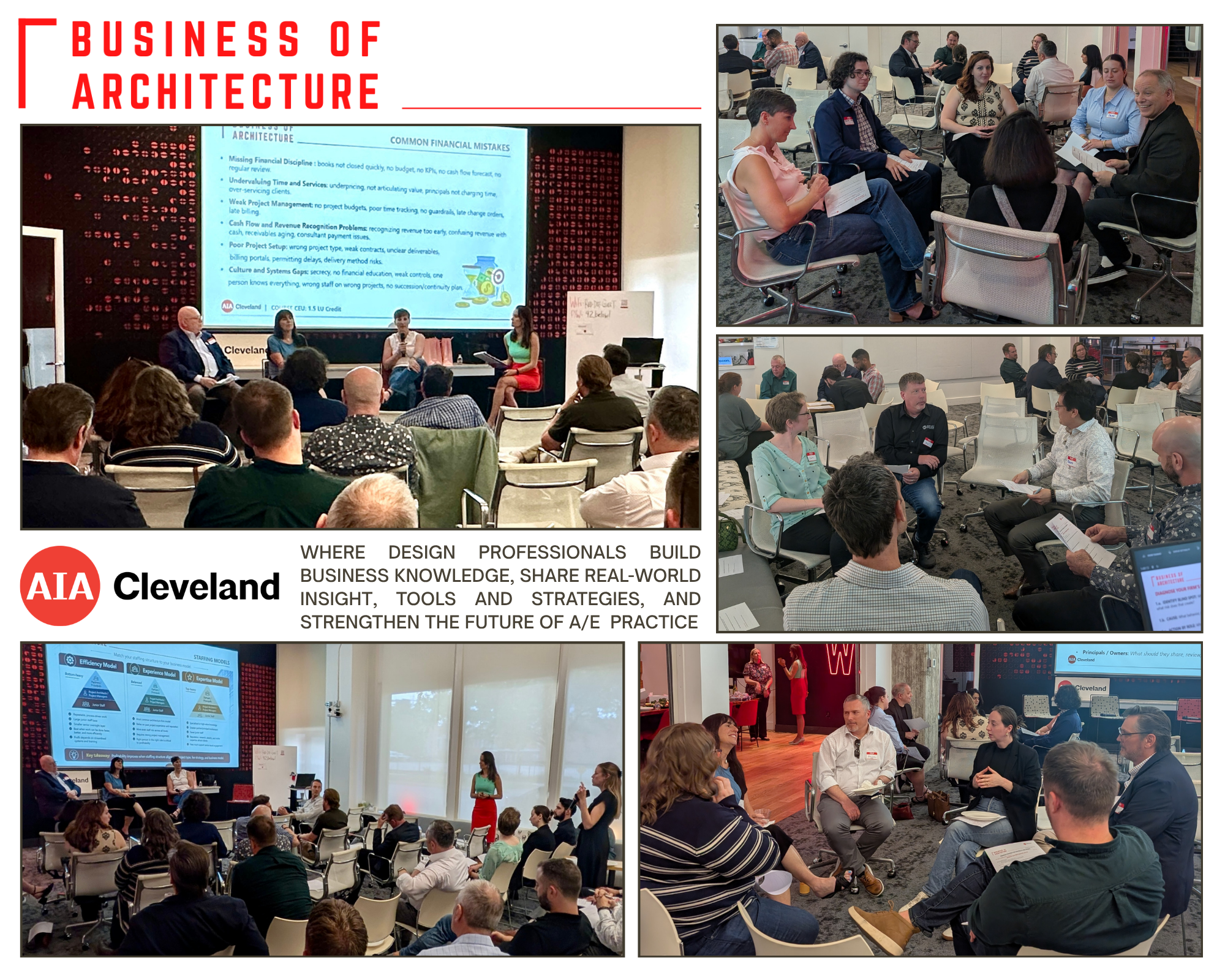
Together, the panelists explored what it really means to be a financially healthy firm. The discussion moved beyond profit, bookkeeping, and whether there is enough work coming in, and instead looked at how financial health is connected to the way firms plan, staff, manage projects, communicate, and respond to risk. Panelists also emphasized how these issues show up differently across firm sizes and roles, from emerging professionals and project managers to principals and owners.
A major theme throughout the session was that firms often lose money in ways they do not immediately see. The panel discussed common financial mistakes such as undervaluing time and services, over-servicing clients, weak project management, poor time tracking, delayed billing, unclear scope, aging receivables, and limited financial visibility across teams. They also emphasized that financial health is not only a back-office responsibility. Everyone in a firm may not need the same level of information, but everyone needs enough context to understand how their decisions affect the work, the client, the team, and the firm.
The event format also created space for attendees to apply the conversation to real-world scenarios. Following the moderated panel, attendees broke into small groups for a facilitated roundtable exercise led by the panelists. Each group discussed where firms may have the least financial clarity, what behaviors or lack of visibility may be creating risk, and what emerging professionals, project managers, middle managers, principals, and owners can do to improve financial clarity and performance. Groups then reported back to the larger audience, creating another layer of peer-to-peer learning and shared insight.
Feedback from attendees has already been extremely positive:
“The financial edition of business of architecture was a needed and welcome, engaging conversation regarding the joys and difficulties of firm ownership. We had dynamic conversations regarding paying your consultants, timely invoicing, revenue recognition, and absorbing uncertainty. Discussing finances is always a delicate conversation, and this was done incredibly well. Thank you so much to the AIA Cleveland BoA Team for pulling together such experts in Jack Withrow, Carole Sanderson and Pamela Neckar.”
Another attendee shared that the event was “an extremely valuable experience,” highlighting how BoA always brings together architects, engineers, and industry professionals for thoughtful discussion, peer connection, and networking. They appreciated the well-structured and effectively moderated panel, noting that each panelist offered unique perspectives and practical insights attendees could apply in their own work. The breakout groups and networking afterward were especially valuable because they created space for deeper conversation, shared learning, and stronger professional relationships. Overall, the attendee felt the event was well worth the time and financial investment and looks forward to future AIA – BoA events.
The overarching message for this topic is not just to react faster when something goes wrong. The goal is to build firms that are more proactive, more transparent, more resilient, and better prepared for the future. As project and business complexity continue to rise, success will be defined by how well firms align strategy, investment, and action while maintaining both control and flexibility.
These conversations are exactly what the BoA series is intended to provide: practical knowledge and tools to help members and the NEO design community strengthen their firms, better understand their own value, and improve the profession over time. We know we are only scratching the surface on these important topics, but each conversation is a meaningful step toward helping our community grow, support one another, and collectively shape the future of the AE industry.
Lastly, as we continue building a stronger database of potential speakers on specific topics and areas of expertise to support future events, please feel free to nominate anyone you think would be a strong fit as a panelist through the BoA Panelist Recommendation Form here:: BoA Panelist Recommendation Form!
We are always looking to bring valuable knowledge to our members so that, even incrementally, we can continue helping improve the industry and create a broader impact in the communities we serve.
Thank you for your support and we look forward to seeing you at our next session a few months.
Sincerely,
BoA Team
Nora Hoxha, Assoc. AIA
David Maniet, AIA
Katie Lester, AIA