Event Recap: Body of Work - Philip Lindsley Small
The most recent session of AIA Cleveland’s Body of Work series on May 7, 2026 brought nearly 100 attendees high above Public Square for an evening dedicated to the life, work, and legacy of Philip Lindsley Small.
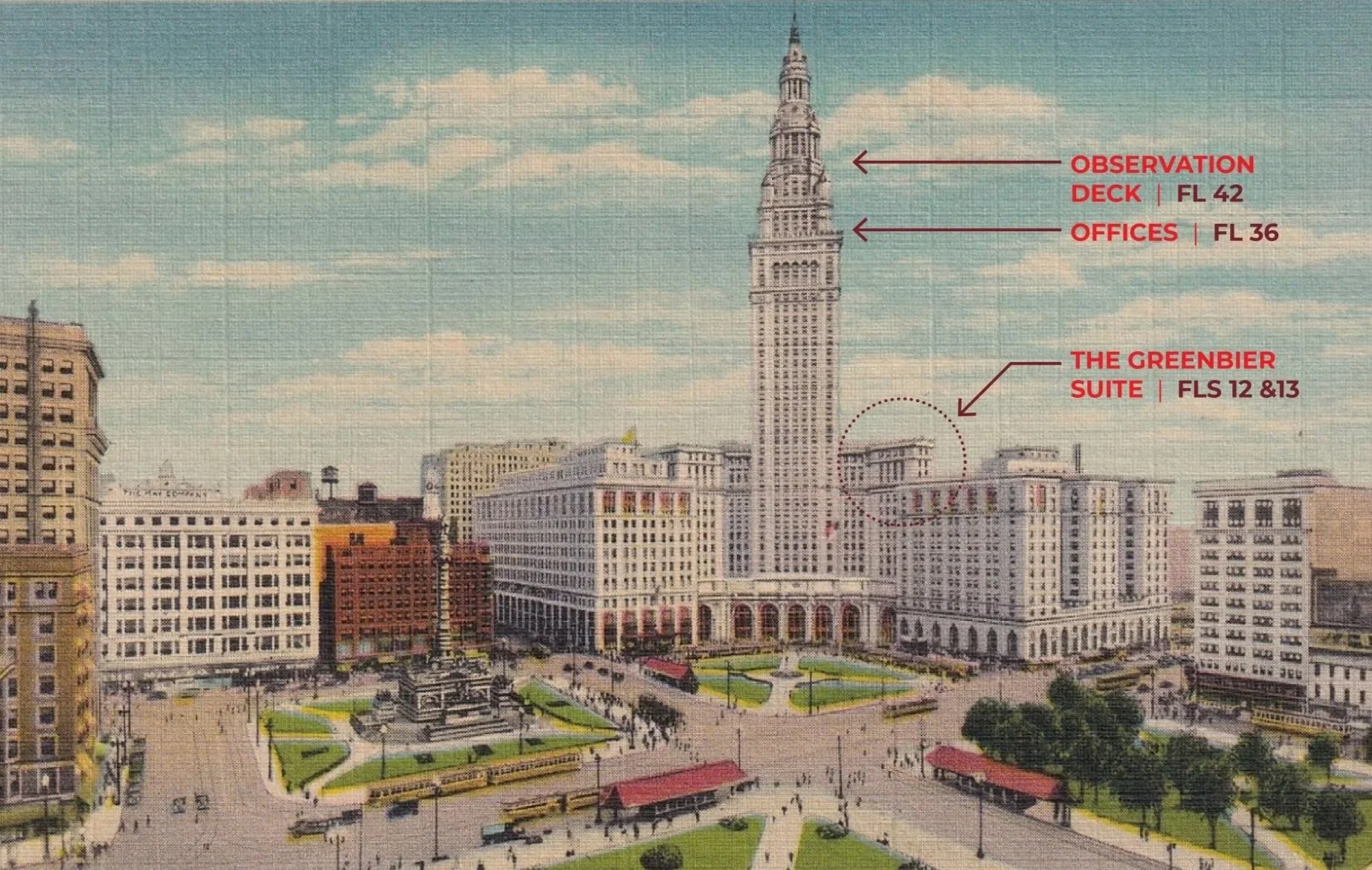
Presented by David Ellison and hosted inside the Greenbrier Suite at Terminal Tower, the program explored the work of Small, of Small & Rowley Architects, and his remarkable connection to the Van Sweringen brothers. The setting could not have been more fitting. The Greenbrier Suite was once the Van Sweringens’ downtown residence, perched within the very tower that embodied the ambition of their real estate and railroad empire.
At their height, the Van Sweringens controlled nearly 30,000 miles of railroad, roughly one-tenth of the nation’s rail network. Their vision reshaped Cleveland’s physical landscape, from Shaker Heights to Public Square, and helped make the Terminal Tower one of the great architectural and urban achievements of its time.
As guests arrived on the 12th floor, music from the 1920s played in the background. The elevator doors opened into a hallway that seemed to pull everyone back into Cleveland’s golden age. Dark wood, Tudor-inspired details, and the layered elegance of the Greenbrier Suite set the tone for the evening. Near the Green Room, a Dorothy Draper-designed dining room from the 1940s (after the Van's time in the suite), guests gathered for drinks, including ginger ale and champagne cocktails, two beverages with a fitting 1920s spirit.
For the first 45 minutes, attendees moved through the 12th floor, socializing, exploring, and taking in a space that is rarely open to the public. Tea sandwiches, shrimp cocktail, desserts, and other refreshments were served in the Boardroom and Gold Room. It was like stepping into a living piece of Cleveland history.
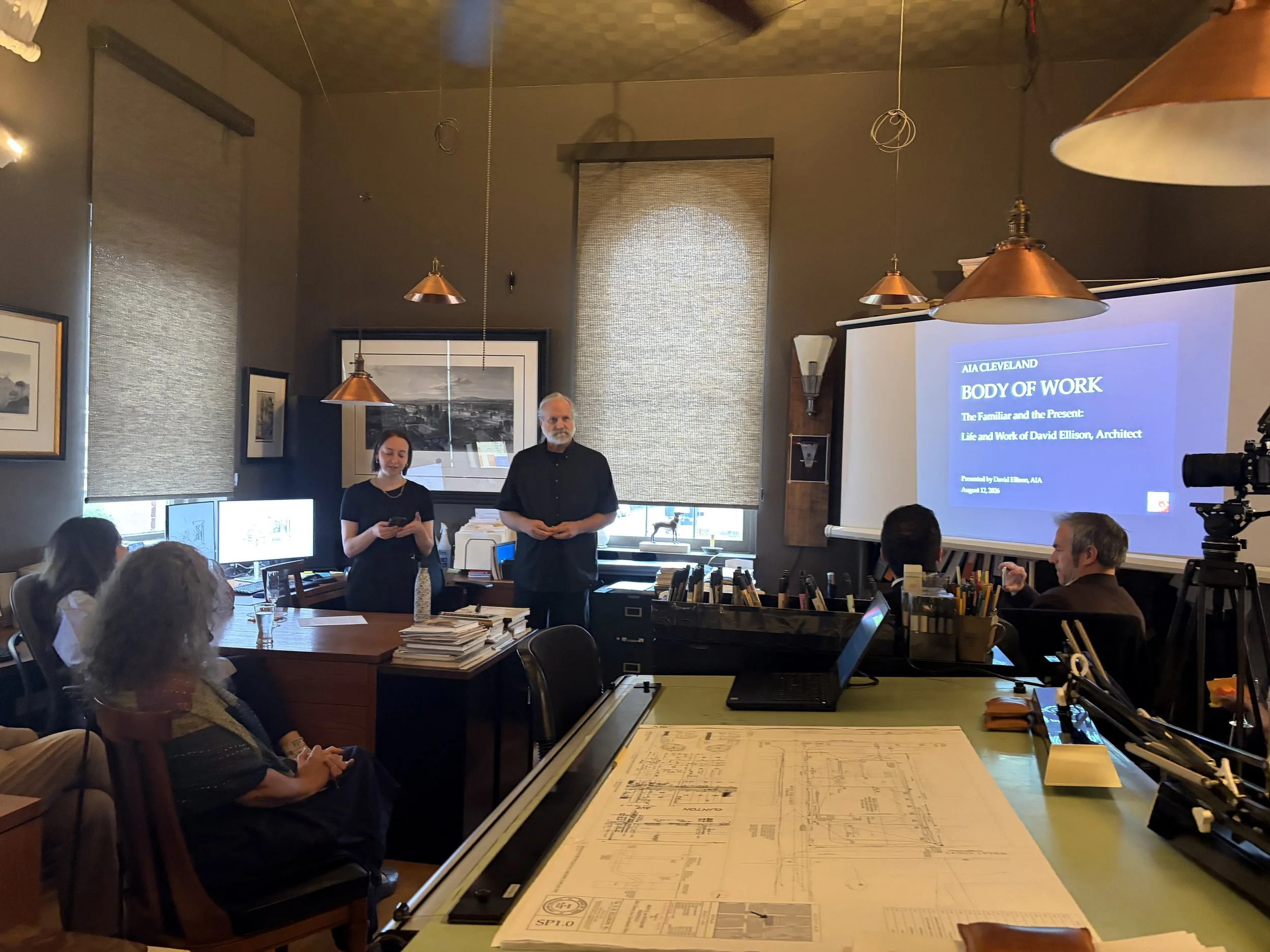
After the social hour, guests gathered in the Great Room for David Ellison’s presentation. As he told the story of Philip Small’s career, it became clear how deeply Small’s work is intertwined with Cleveland’s built environment. He helped shape Shaker Square as we know it today, from what was to be an outward facing circle, to the inward facing buildings on a square. He also designed John Carroll University’s campus and initial buildings, a number of infrastructure projects around town, and the Karamu House among other structures and masterplans. His relationship with the Van Sweringens gave him extraordinary opportunities, and through those opportunities, he left fingerprints across the city that remain visible today. A partial list of his work is below:
One of the most meaningful parts of the evening was the way the story expanded beyond Small himself. Dave Robar worked on the Greenbrier Suite in the early 1990s, when it was converted into law firm offices, and John Williams worked on the renovation of the Terminal Tower observation deck while he was with Forest City. Both were able to share stories with those that attended about their work on the complex.
That is one of the beautiful things about architecture. In celebrating the life and work of one architect, we are reminded how many hands shape the built environment over time. We inherit spaces, adapt them, layer new uses into them, and sometimes transform them completely. Sometimes, we are the ones that lay the foundation others work wiith, as is the case with much of Small's work. The built environment is not static. It changes as we change, and at different moments, each of us has the opportunity to become part of that story.
Following the lecture, attendees explored the rest of the Greenbrier Suite on the 13th and 14th floors before continuing upward to the 36th floor, where the Van Sweringens once kept their offices. Today, that space serves as the downtown office of K&D Group, our host for the evening.
Standing at those windows, it was easy to imagine the industrial landscape that once stretched across the Cuyahoga River Valley and helped generate Cleveland’s extraordinary wealth. It was that wealth and ambition that made possible something as bold as Terminal Tower, for a quarter of a century, the tallest building in the world outside New York City and a pioneering example of mixed-use development built above a rail terminal.
As guests moved through the offices on the 36th floor, the view told another chapter of the story. Beyond Terminal Tower rose the buildings that came after it: the Huntington Building, Key Tower, the towers of the Erieview Plan, and now the new Sherwin-Williams headquarters. Looking out across that skyline, one could not help but wonder what the Van Sweringens would think of Cleveland today.
I think they might appreciate that the city keeps building. Keeps adapting. Keeps imagining what comes next.
Thank you to everyone who joined us for this sold-out evening, and thank you again to David Ellison, K&D Group, Aaron Price, Scott Brown, and everyone who helped make the program possible.
David Ellison will present his own work at his studio in Ohio City for our next Body of Work lecture this summer. The date will be announced soon.